 |
| One 'Papan' |
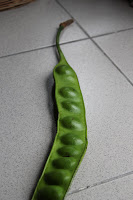
First let me clear the term 'papan': It is an article (
penjodoh bilangan in Malay) - like a herd of cattle, a cup of coffee, a flock of chickens - you get my drift (in Malay e.g se ekor lembu, sehelai kain, sebiji mangga - faham la tu) to describe one string of this bean called
Petai- only this bean, no other beans carry the article 'papan'. Don't ask me why this is so. May be the DBP -'Dewan Bahasa dan Pustaka' - our linguistic authority can explain.
Anyway, deep in the jungles surrounding The Farm you'll find
Petai trees growing, matured trees some 30 metres tall. So it is quite tough to get to the fruits. Climbers have died from falling down the petai trees.
Botanists and plant scientists would know petai as
Parkia speciosa, a leguminous plant. They are also known, in various countries in the Far East, as bitter bean, sataw, twisted cluster bean, yongchaa, yongchaak, zawngtah or stink bean.
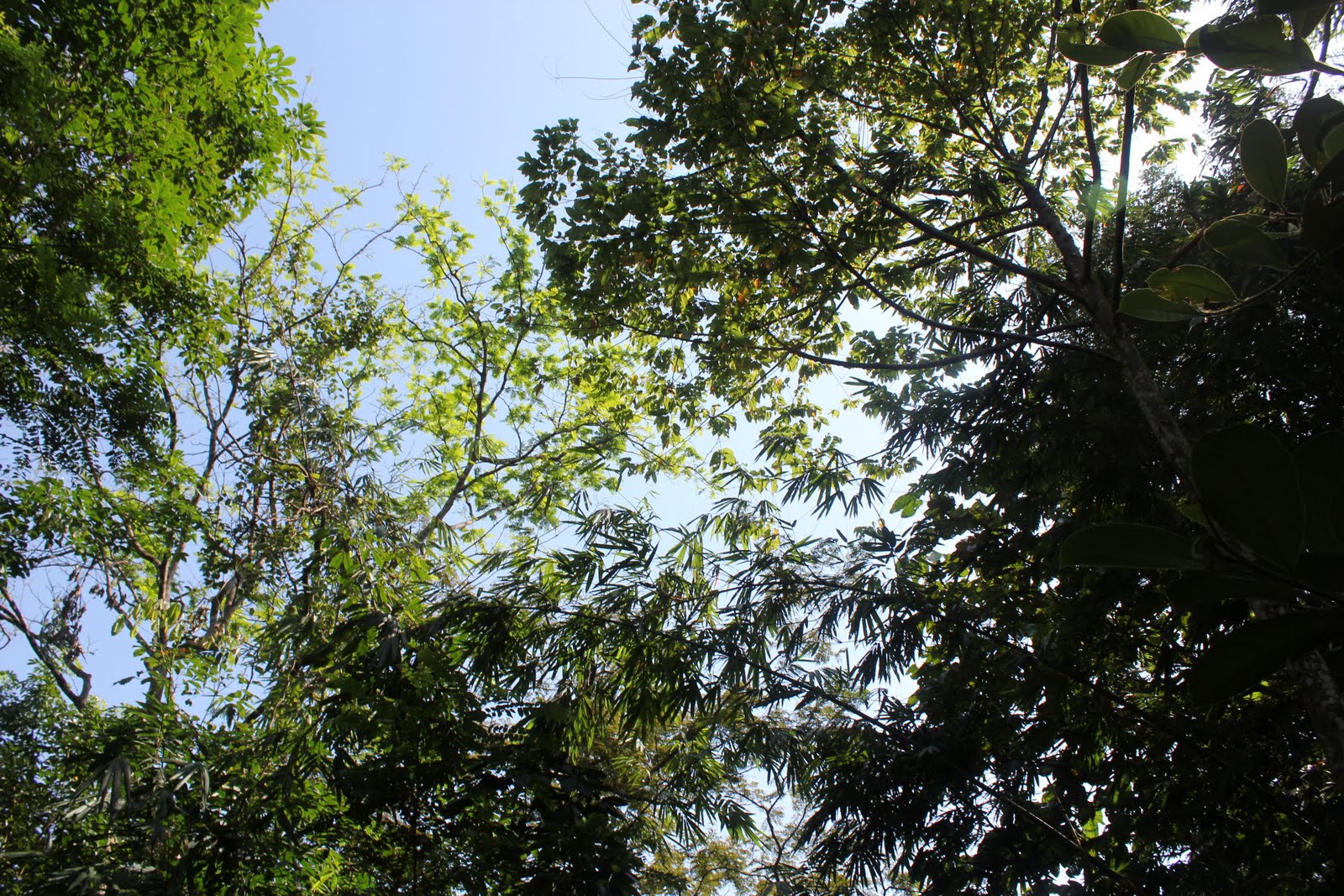
In the centre of these photos, extending high beyond the bamboo and other
tall trees, you can see the light green branches of the Petai tree
 |
| A young Petai tree - not unlike The Flame of the Forest |
 |
| Petai seedling just planted |
 |
| 'Orang Asli' or the indeginous people selling Petai |
 |
| They are sold in a bunch of 100 'papan' |
Petai is very popular amongst Asians. Only the bean inside is eaten, either raw, or pickled, or cooked into a 'sambal' - by frying with a paste consisting of blended or pestel and mortar-pounded shallots, garlic, dried chillies and tamarind juice (salt and sugar to taste).
 |
| The petai beans |
 |
What is left of the skin after the
beans have been taken out |
 |
| Sambal Petai |
Apart from being a fantastic appetizer due to its exotic taste and crunchiness, and the added heat if turned into a sambal, petai is known as a cure for and prevention of diabetes.
That's what I thought, until I discovered a university professor's research findings. Professor Madia Dr.Aminuddin AHK of the Dept.of Physiology Medical faculty of UKM (University Kebangsaan Malaysia) conducted various studies and his research has proven petai's effectiveness as a cure for many other human ailments such as depression and PMS.
You can read his entire findings
here. You will be amazed.
Dr Aminuddin compared apple and petai and concluded that eating a papan a day is better at keeping the doctor away.